 In Room 20 we have been learning about how an aircraft can achieve flight. We have also been learning how to write a report with an introduction, paragraphs and a conclusion. We have all written reports about the main principles of powered flight. Check out these informative reports.
Flight By Jade D
Powered flight is the ability for a plane or a helicopter to fly through the sky. The power comes from an engine. This report will cover the 4 forces of flight, rotary aircraft, and jet and propeller planes.
4 Principles of Flight
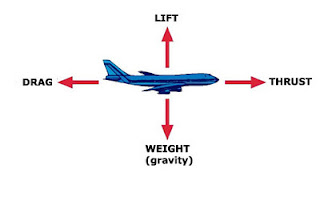
There are 4 forces that control flight, they are thrust, lift, drag, and weight. Thrust is produced by the engine, and it keeps the plane going forward. Drag is a pull force created by the air, and it keeps the plane balanced. Lift keeps the airplane in the air, and lift is made by the wings. Weight is a pull force, and it carry’s the plane to the ground.
Rotary Wing Aircraft
Helicopters don’t need to move forward in order to fly because they are able to generate lift. The rotor is turned around rapidly by the engine. Tilting the rotor makes the helicopter go forward, backwards, and side to side. The rotor wings produce enough lift to overcome the weight.
How is Thrust Created?
There are two types of airplanes: propeller driven planes, and jet planes. Propeller driven airplanes are driven by a propeller that is turned by the engine. Propellers are shaped like wings. Propellers generate lift to keep the plane in the air. Originally propellers were made out of wood but now they are made out of metal. A jet plane has no propeller but has an engine instead. A jet plane’s tank is a tube with liquid fuel.
Powered flight has been an amazing discovery, it has kept planes in the air. This report has covered, the 4 amazing principles of flight, rotary aircraft, and fixed wings. We can now fly like the birds because of the people that created flight.
Powered Flight By Nadia L
Powered Flight is the ability planes use to take-off into the air. Powered Flight uses an engine or motor to create lift. Airplanes, helicopters and other man-made flying vehicles use powered flight. The four principles of flight, winged aircrafts and the two basic types of planes will be included in this report.
The Four Principles of Flight
There are four principles of flight - Lift, Drag, Thrust and Weight. Each of these forces are used by aircraft that take flight. Lift is used to take-off into the sky, it is a push force which is made by the forward motion of the aircraft. Drag is a pull force produced from air resistant. Thrust is a push force powered by the engine. Weight is the pull of gravity towards the centre of the earth.
Winged Aircraft
There are two different winged aircraft. Rotary winged aircraft such as helicopters, have narrow wings called rotors provide lift to take-off. Tilting the rotor allows the aircraft to move forward forward, backward and side-to-side. Fixed winged aircraft have thick, wide wings which are attached to the fuselage, the aircraft needs to move forward to generate enough lift under the wings to lift up into the sky.
Two Basic Planes
There are two basic plane types. Propeller driven planes have propellers with two or more blades which are powered by an engine. Jet planes has jet engines. Jet engines uses liquid fuel which is burnt by an air compressor, the heat is then released at high speed out the back of the plane.
Powered Flight has been an amazing discovery for all mankind. This report should inform you of the basics of flight: The four principles, the difference between rotary and fixed winged aircraft and also the two basic plane types. Powered flight has helped the human race to conquer the dream to fly.
Flight By Jack Cr
Powered flight is the ability for an airplane or a helicopter to maintain flight in the air by using an engine. This report will cover the four forces of flight, rotary wing aircraft and propeller driven and jet planes.
The four principles of flight
There are four forces that control flight, they are lift, thrust, drag and weight. Lift makes the plane go up and is created by the wings. Thrust pushes the plane forward by the engine. Drag and weight are pull forces created by air and gravity. To fly, a plane needs greater push forces than pull forces.
Rotary Wing Aircraft
Helicopters are rotary wing aircraft and the rotor is shaped like a narrow wing, to create more lift than weight. The rotor is turned rapidly by the engine and is tilted, so the helicopter can move forward, backward or side to side.
Propeller and Jet planes
There are two basic types of planes, they are propeller driven and jet planes.The propeller is turned by the engine. The propeller is shaped like a wing and has two or more blades which used to be made of wood but are now made of metal. Jet planes do not have a propeller, but a jet engine instead. Sir Isaac Newton once said “for every action there is an equal and opposite reaction”. If you think of a jet engine as a tube where liquid fuel is turned at high pressure using air from a compressor. The heat forces the gases out the back, which moves the plane forward.
Powered flight is the capacity for an airplane or helicopter staying in the air for a long time using an engine. This report has informed you about the four forces of flight, rotary wing aircraft, and propeller driven and jet planes. The discovery of flight has been an amazing breakthrough for humankind.
Powered flight
By Antonia L
Powered
flight is the ability for a plane to lift up in the sky for a long time
relying on an engine. This report will inform you about the 4 forces of
flight, rotary winged aircraft and how thrust is created.
The 4 principles of flight
There
are 4 forces that control flight. They are weight, drag, thrust and
lift. Lift makes the plane go up and is created by wings. Thrust pushes
the plane forward by the engine. Drag and weight are pull forces created
by air and gravity. To fly,a plane needs greater push forces than pull
forces.
Rotary winged aircraft
Helicopters
are ‘rotary wing aircraft.’ They don’t need to go forward to fly. Their
rotors are shaped like aerofoils and provide lift. Helicopters move
side to side and forward and backwards by tilting the rotor.
How thrust is created
Propeller
driven airplanes have a propeller that turns by some type of engine.
Propellers are shaped just like the the wings and generate lift. The
first propellers were made of wood but now most are made of metal. Jet
planes have no propellor and the engine moves the Jet forward instead
of propellers. Think of a Jet engine as a tube which liquid fuel is
burned at high pressure.
Powered
flight has allowed helicopters and planes to fly up into the sky. This
report has covered the fantastic 4 forces of flight, rotary wing
aircraft and how thrust was created.Now we can fly anywhere thanks to
powered flight!
Bibliography